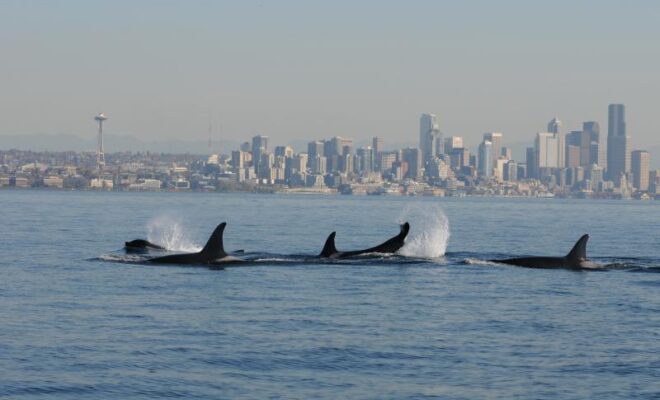
Southern Resident killer whales swim just off Seattle’s shore. NOAA experts anticipate that the West Coast and the Pacific Islands will feel the effects of the 2026–2027 El Niño event most directly. Credit: NOAA Northwest Fisheries Science Center; taken under NOAA permit #781-1824

How Will El Niño Affect Your Local Fisheries?

10/10/2026 - By fisheries.noaa.gov, fisheries.noaa.gov. What does El Niño mean for U.S. fisheries and marine life? What can fishermen and coastal communities expect to observe and experience as this event continues and potentially intensifies? And what are scientists at NOAA Fisheries doing to track this natural phenomenon? The El Niño-Southern Oscillation is a powerful… SEE MORE
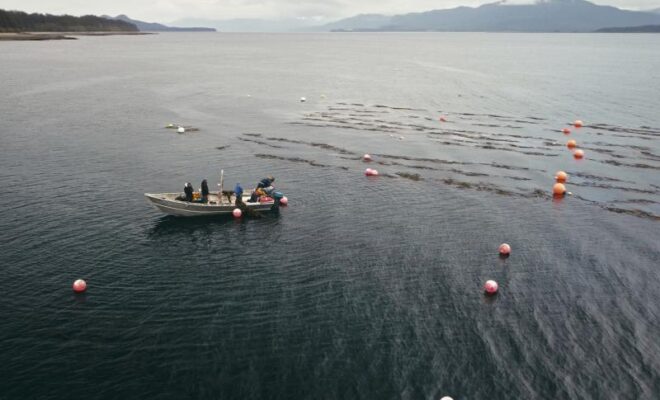
NOAA Fisheries and Sea Quester Farms partnered up to evaluate if kelp farms provide habitat for marine life in Alaska. Pictured here is one of Sea Quester’s farms in southeast Alaska near Juneau. Credit: Hatch Blue, Alaska Mariculture Cluster

Kelp Farms and Marine Life Co-Exist in Southeast Alaska

10/3/2026 - By fisheries.noaa.gov, fisheries.noaa.gov. Marine aquaculture, or mariculture, provides economic opportunities for coastal communities in Alaska through farming shellfish and seaweed. NOAA Fisheries continues to support Alaska’s growing aquaculture industry through policy and permitting—providing access to resources and research. A recent study highlights one of our newest aquaculture research collaborations. Through this… SEE MORE
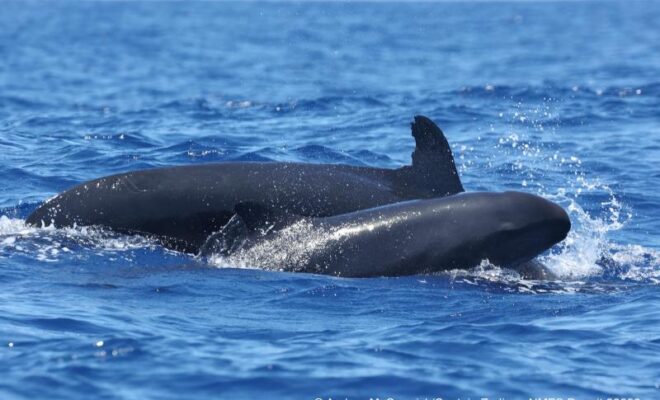
Endangered insular false killer whale HIPc0280 with her new calf. Credit: Captain Zodiac/Andrea McCormick (NOAA Fisheries Permit #26596)

Seeing Double: Good News for Rare False Killer Whales in Hawaiʻi

9/24/2026 - By fisheries.noaa.gov, fisheries.noaa.gov. Research partners spotted two endangered main Hawaiian Islands insular false killer whale calves this year, and they’re starting to grow up! This is a rare and exciting discovery for this small, resident population of only about 140 individuals [caption id="" align="alignright" width="437"] Range of the endangered main… SEE MORE
Sablefish farmed in net pens at NOAA's Northwest Fisheries Science Center. Credit: Megan Ewald for NOAA Fisheries.

Managing Genetic Risk in Offshore Aquaculture

9/19/2026 - By fisheries.noaa.gov, fisheries.noaa.gov. Aquaculture can sustainably produce seafood to complement wild-caught fisheries. However, like all food systems, aquaculture requires sound science to ensure farmed species don’t harm wild species. Scientists at NOAA’s Southwest Fisheries Science Center are working to understand the genetic risks in offshore aquaculture. NOAA has identified 21,000… SEE MORE
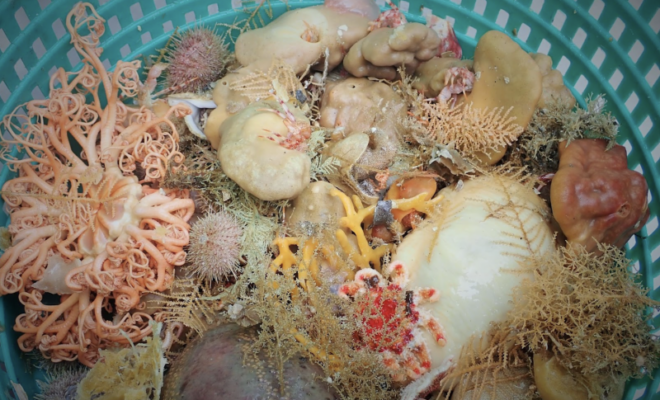
Deep-sea sponges and other invertebrates in a collection basket during a bottom trawl survey. Credit: NOAA Fisheries

Nine Species of Deep-Sea Sponges Discovered in Alaska

9/18/2026 - By fisheries.noaa.gov, fisheries.noaa.gov. Scientists have discovered nine new species of sponges in the Gulf of Alaska and Aleutian Islands. The specimens were collected during the Alaska Fisheries Science Center’s long-standing annual bottom trawl surveys, which monitor the condition of groundfish and shellfish stocks in Alaskan waters. For these sponge studies, researchers… SEE MORE
Image Credits: Flickr.com.

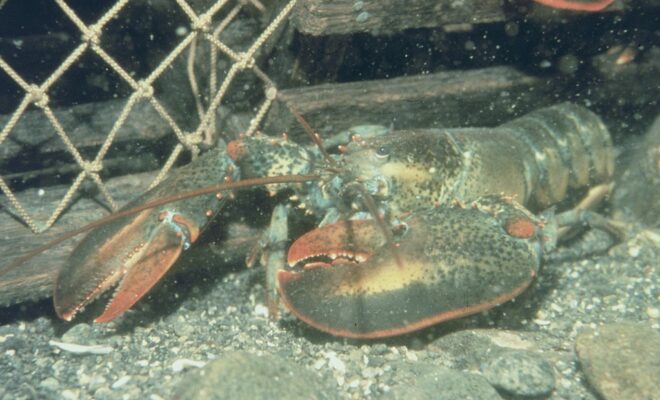
Is Offshore Construction Noise Stressing New England’s Lobsters? WHOI Scientists Want to Know

9/8/2026 - By Kiran Johnson, whoi.edu. As offshore wind farms multiply along the New England coast, a question with real consequences for one of the region's most valuable fisheries is getting its first rigorous scientific investigation: does the noise from wind farm construction affect the American lobster? WHOI scientists are working alongside… SEE MORE
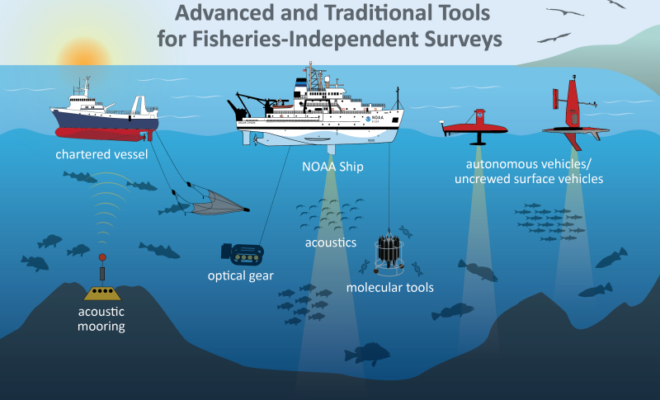
The future of fisheries-independent surveys will include traditional capture-based surveys as well as advanced technology such as acoustic, optical, and molecular tools deployed from survey vessels, uncrewed vehicles, and moored to the seafloor. Credit: NOAA Fisheries/Su Kim

Charting the Future of Fisheries-Independent Surveys

9/7/2026 - By fisheries.noaa.gov, fisheries.noaa.gov. Fisheries-independent surveys operate on dedicated survey vessels and are the foundation of sustainable fisheries management. They provide the consistent data on marine resources we need to inform stock assessments. These data are collected using a scientifically rigorous sampling framework and are used to set catch limits. As… SEE MORE
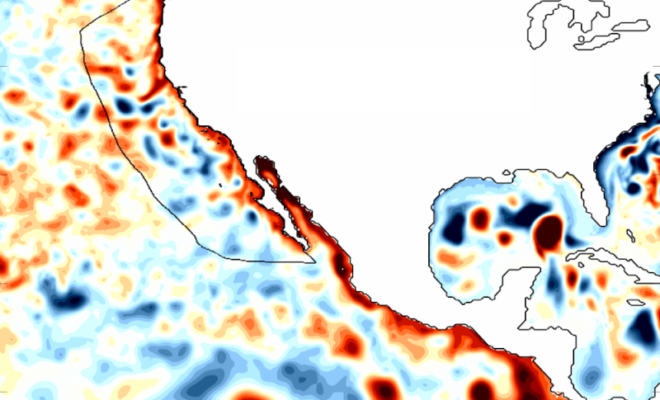
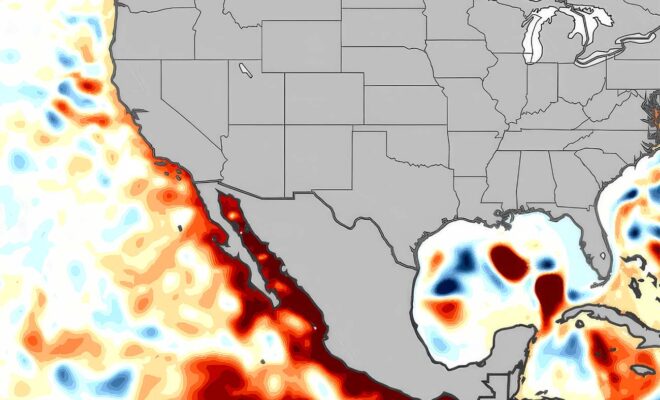
Coastally-trapped Kelvin waves, a signature of El Niño, traveled north along the West Coast during the 1997/1998 El Niño, as shown in a map of sea surface height anomalies. Darker reds show sea levels higher than normal, while darker blues show heights below normal. Scientists are now watching for similar waves to move up the West Coast this fall. Credit: Dillon Amaya/North Carolina State University

Ocean Indicators Help Track El Niño’s Arrival on the West Coast

9/5/2026 - By fisheries.noaa.gov, fisheries.noaa.gov. Has El Niño reached the West Coast? You might think it has. After all, the ocean off Southern and Central California is unusually warm. But that is from a recent marine heatwave predates the current El Niño. Much of the Pacific Coast is experiencing relatively normal conditions while still… SEE MORE