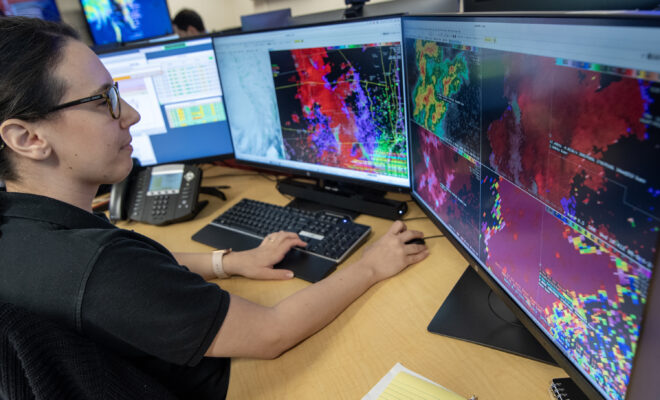
A meteorologist with NOAA’s National Weather Service reviews atmospheric data as part of the Advanced Weather Interactive Processing System (AWIPS), software that enables forecasters to analyze data, and issue forecasts and alerts. (Image credit: Robert Hyatt/NOAA NWS)

NOAA’s National Weather Service Eyes the Cloud for Next-Gen Applications

4/6/2026 - By noaa.gov, noaa.gov. Technology improvements will add mobility to the NWS throughout the U.S. NOAA’s National Weather Service (NWS) has awarded two contracts for the NWS’s new cloud-based data and applications services, launching a new era of modernization for the nation’s weather agency. These tools will effectively transfer the capabilities… SEE MORE
(Photo by Taylor Crockford, ©Woods Hole Oceanographic Institution)

WHOI Study Reveals the Hidden Molecules That Drive the Ocean’s Carbon Cycle

4/4/2026 - By whoi.edu, whoi.edu. The surface waters that boaters, anglers, and coastal communities depend on are teeming with invisible chemical exchanges that help regulate Earth's climate. A new study led by Woods Hole Oceanographic Institution and Columbia University has identified the specific molecules that marine phytoplankton release into seawater — compounds… SEE MORE
Image Credits: nesdis.noaa.gov.

SWFO-L1, Renamed SOLAR-1, Reaches Final Destination One Million Miles from Earth

3/23/2026 - By nesdisnoaa.gov, nesdis.noaa.gov. On January 23, 2026, NOAA’s Space Weather Follow On – Lagrange 1 (SWFO-L1) observatory executed its final engine burn, successfully entering its final orbital position at Lagrange point 1. Located roughly one million miles from Earth, this unique vantage point allows the satellite to continuously monitor the sun and space… SEE MORE
Image Credits: pexels.com.

Why Are Corals So Colorful? Understanding Reef Health Indicators

1/4/2026 - By Woods Hole Oceanographic Institute, whoi.com. For harbor communities and coastal areas that depend on healthy reef ecosystems, understanding coral coloration provides valuable insights into reef health. Coral reefs protect harbors from wave action, support commercial and recreational fisheries, and indicate overall marine ecosystem conditions—making the science behind coral color… SEE MORE