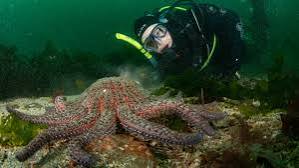
Michael Peñuelas, a Seattle scuba diver, examines a large sunflower sea star in the Edmonds Marine Park in Puget Sound, Washington, in 2021. (Image credit: Courtesy of Zachary Gold)

New eDNA Tool To Help Track Recovery Of Sunflower Sea Star, a Pacific Coast ‘Apex Predator’

6/30/2026 - By noaa.gov, noaa.gov. A wasting disease that surged during the intense 2013-2016 Pacific marine heatwave known as the Blob decimated numerous species of sea stars and triggered the collapse of vast coastal kelp forests from the Aleutians to the Baja Peninsula. One of the species most affected was the sunflower sea star, an… SEE MORE
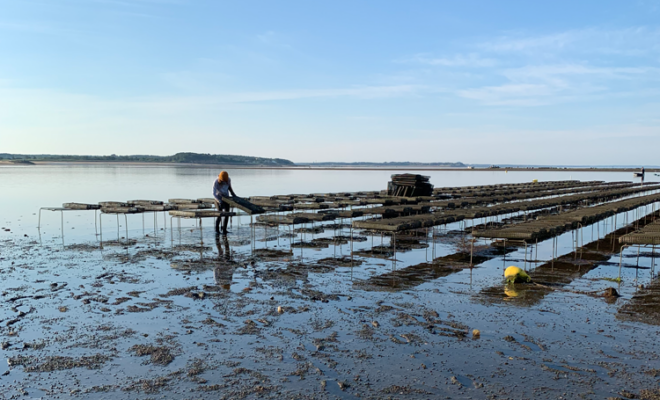
A person tends to oyster beds at an oyster farm in Wellfleet, Massachusetts. (Image credit: NOAA Fisheries)

NOAA Strengthens Commitment to Aquaculture Through New Cooperative Institute

6/28/2026 - By noaa.gov, noaa.gov. Today, NOAA announced the University of New Hampshire as host institution for the new NOAA Cooperative Institute Fostering Aquaculture Research and Markets (CIFARM) to expand NOAA’s impact and strengthen efforts to boost American seafood competitiveness. After a highly competitive application process, this new five-year cooperative institute will harness partnerships… SEE MORE
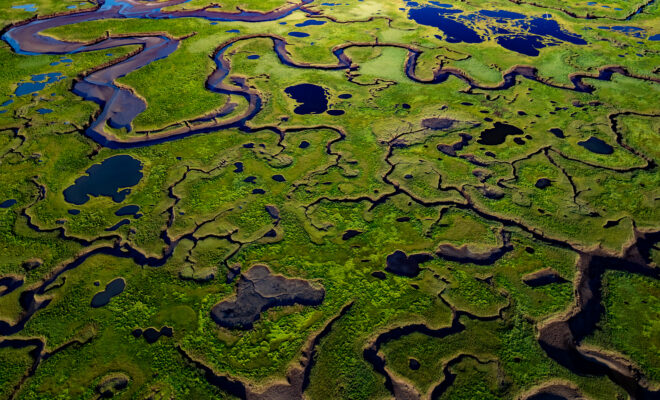
This image is of a salt marsh in coastal Maine. The high-resolution, land cover mapping NOAA has done for the state captures the tidal creeks, pannes, pools and vegetation with far greater precision and detail than past, 30-meter mapping. (Image credit: NOAA)

The Coast Is Clear-er: NOAA Unveils New Land Cover Maps 900 Times Greater In Detail

6/7/2026 - By noaa.gov, noaa.gov. NOAA is releasing new, higher-resolution land cover maps for coastal Alabama, Mississippi, Northeastern Ohio, Rhode Island, and the Puget Sound in Washington. The data will be made available through the Digital Coast website and will provide these communities with better information for decisions related to stormwater management, water quality… SEE MORE
Coral bleaching at Cheeca Rocks in the Florida Keys in 2023. [Credit: NOAA]

World’s Fourth Mass Coral Bleaching Event Likely Ended in 2025

6/7/2026 - By nesdis.noaa.gov, nesdis.noaa.gov. After analyzing satellite data and bleaching observations, NOAA’s experts say the record-breaking fourth global coral bleaching event likely concluded in mid-2025. The fourth global coral bleaching event was confirmed by NOAA on April 15, 2024. From early-2023 to mid-2025, bleaching-level heat stress impacted 84% of the world’s coral… SEE MORE
During the 2025 Deep-sea Habitats of the Cook Islands expedition on Exploration Vessel Nautilus the team surveyed various seascapes to better understand seabed environments, and natural and mineral resources in the region. In this image, polymetallic nodules rest on sediment accumulated in a depression between rounded pillows and extended lobate lava flows, which are evidence of ancient volcanoes. (Image credit: Courtesy of Ocean Exploration Trust)

NOAA Scientists and Partners to Map Deep Waters, Seabed in the Cook Islands

6/6/2026 - By noaa.gov, noaa.gov. This summer, NOAA Ocean Exploration will conduct an expedition on NOAA Ship Okeanos Explorer to map, explore and characterize deep waters off the coast of the Cook Islands. The effort is in partnership with the Cook Islands Seabed Minerals Authority. Using remotely operated vehicles (ROVs), mapping technologies and onsite… SEE MORE
Spring Chinook Salmon. Credit: Michael Humling, U.S. Fish & Wildlife Service

NOAA Fisheries Finds Listing Gulf of Alaska Chinook Salmon Under the Endangered Species Act “Not Warranted”

5/28/2026 - By fisheries.noaa.gov, fisheries.noaa.gov. NOAA Fisheries’ 12-month review shows a low risk of extinction. NOAA Fisheries has completed a status review and 12-month finding for Gulf of Alaska Chinook salmon in response to a January 2024 petition. The Wild Fish Conservancy petitioned to delineate and list one or more evolutionarily significant units (ESUs) of Gulf of Alaska Chinook salmon… SEE MORE